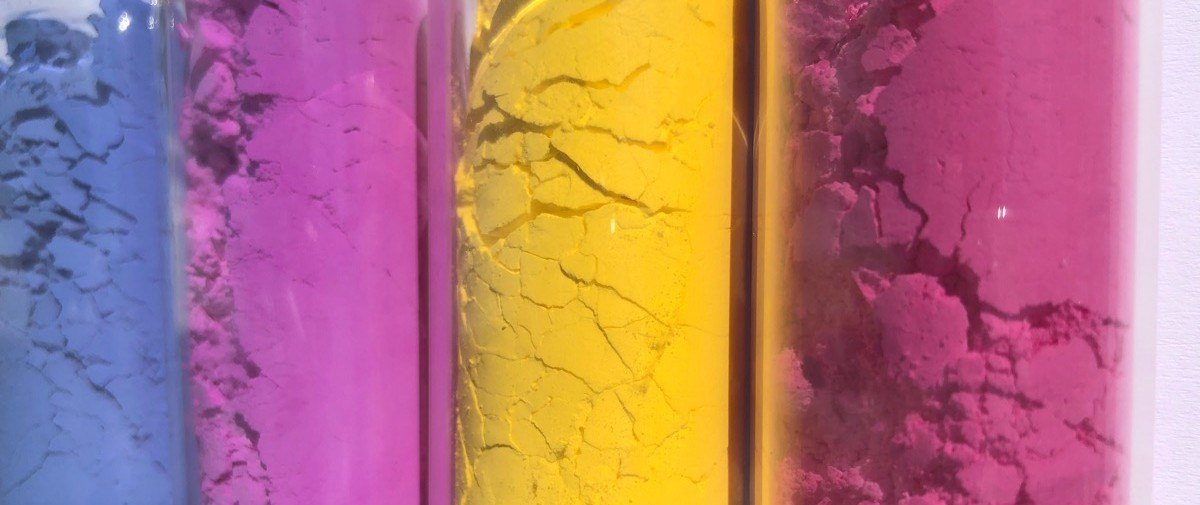
Photochromic Dyes & Pigments
Light-Activated Colour, Synthesised and Encapsulated In-House
Colour appears within a second in sunlight and clears fast in shade. Synthesised and micro‑encapsulated entirely in‑house.
Changing colour is easy. Coming back fast, and doing it again and again, is the hard part.
“Photochromic” combines Photo, meaning light, and chroma, meaning colour — a compound that changes colour under light. Our photochromic dye is a powder that is almost colourless in shade but turns vibrant on sun exposure, and the depth of the shade depends on the intensity of the light.
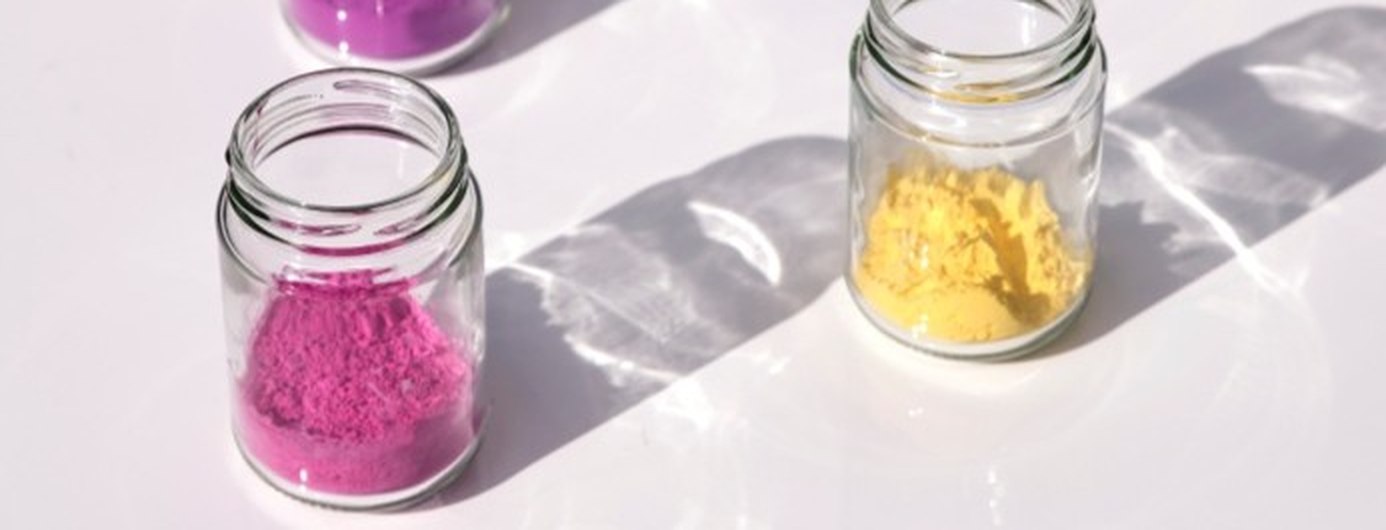
Micro-encapsulated photochromic pigment holds that dye inside microcapsules. The capsule protects the dye, so it behaves far more stably against heat and solvents, expresses a brighter and more vivid colour in sunlight, and can be applied across a much wider range of products.
Ons synthesises the dye from the molecule up and micro-encapsulates it in-house — the entire chain is vertically integrated. Developed and manufactured in Korea, it delivers quality above imported alternatives at a better price, and the platform was built to meet RSL standards under a Korean SMTECH national R&D project (No. S278086).
// Hover a colour to play how it changes in sunlight
- 01
Synthesise the molecule
The light-responsive molecule is synthesised from scratch — this is where the colour and the fade rate are decided.
- 02
Absorb UV
Absorbing UV from sunlight isomerises the molecular structure, creating visible-light absorption — the colour appears.
- 03
Return in shade
Remove the light and the molecule reverts, clearing the colour. Ours reverts faster than market peers.
- 04
Encapsulate
Enclosing the dye in microcapsules shields it from heat and solvent, which widens the range of processes it survives.
- 05
Disperse and apply
The encapsulated pigment disperses into inks or resins and goes straight into printing and injection moulding.
- 06
Verify against RSL
The process is designed and verified against restricted substance list requirements.
- 01
1-second transformation
Colours instantly in sunlight and clears faster than market peers
- 02
4 colours in production
Yellow, magenta, blue and violet — grey, sky blue and green in development
- 03
Vertical integration
From dye synthesis to encapsulation in-house — a real cost advantage
- 04
Micro-encapsulated pigment type
Ready for printing and injection moulding applications
- 05
RSL compliant
Process designed to comply with restricted substance lists
- 06
No SVHC detected
All 209 substances on the EU REACH SVHC candidate list came back not detected — KTR report TBK-2020-005099 (2020)
- 07
Backed by national R&D
Korean SMTECH projects No. S278086 and No. S2690666
Garments and fashion materials
Toys and accessories
Paint and architectural finishes
Eyewear lenses and films
Printing and injection moulding — pigment type
Industrial products
The whole chain, from dye synthesis to encapsulation, in one company
Developed and made in Korea, at a better price than imported alternatives
An RSL-compliant process built under a Korean SMTECH national project (No. S278086)
Both the dye type and the micro-encapsulated pigment type available
Pigment form adjusted to the intended process — printing, moulding or coating
Exporting micro-encapsulated photochromics since 2018
Colour behaviour
| Colour | In shade | In sunlight |
|---|---|---|
| MAGENTA | White powder | Rose pink to deep magenta |
| VIOLET | White powder | Pastel to vibrant violet |
| YELLOW | White powder | Pastel to rich yellow |
| BLUE | Pale greenish white | Vivid blue |
Photochromic Dye — for glasses and films
| Colour | Appearance |
|---|---|
| Yellow | White powder |
| Magenta | Baby pink powder |
| Blue | Light fluorescent green |
| Violet | Baby pink powder |
Photochromic Pigment — for printing and moulding
| Colour | Appearance |
|---|---|
| Yellow | White powder |
| Magenta | White powder with a hint of pink |
| Blue | Light pale grey |
| Violet | White powder with a hint of pink |
- Dye type or micro-encapsulated pigment type?
-
If the process exposes it to heat or solvent, the encapsulated pigment. The capsule protects the dye, so it survives printing and injection moulding and gives a more vivid colour in sunlight. For lenses and films where transparency matters, use the dye type.
- Which colours are available?
-
Yellow, magenta, blue and violet are in production; grey, sky blue and green are in development. Intermediate shades can be made by combining two or more.
What are you looking to solve?
Send us the substrate and your constraints — we will come back with an assessment and samples.