Paper Dyes
Liquid Color Solutions for Paper & Packaging
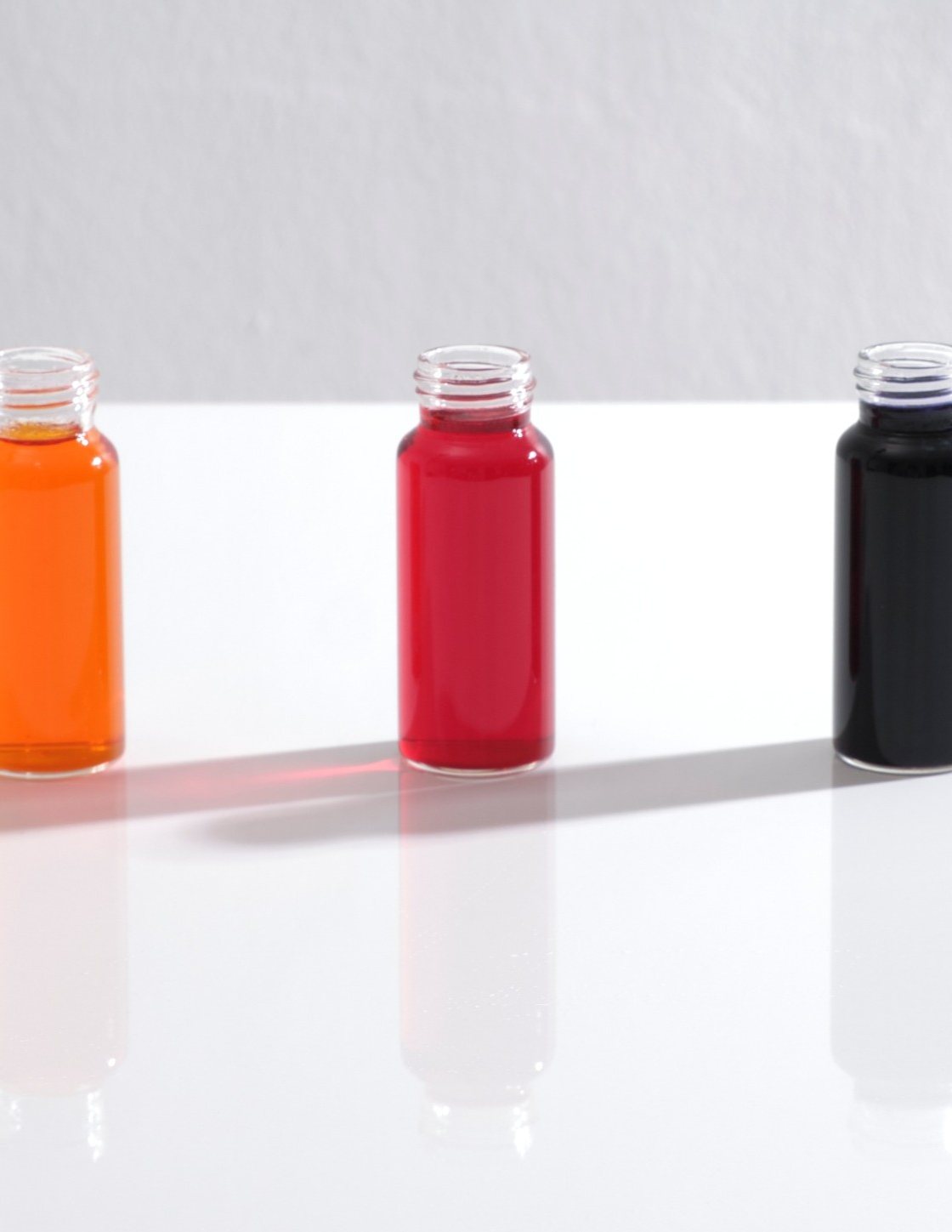
Liquid direct dyes for liner board, kraft and colored paper — dosed straight in, with no powder to dissolve.
Adding colour and reproducing that same colour on a running line are two different skills.
Ons Direct Dye is a high-concentration liquid direct dye developed to colour cellulose substrates — paper and corrugating medium above all. The point is not vivid colour alone but hitting the target shade repeatably in a mill where furnish, water quality, pH and machine speed all keep moving.
It ships ready to use, so there is no separate dissolving step for powder dye. It mixes fast, doses accurately, and drops straight into metering pumps and automated addition systems — less work for the operator, better reproducibility on the line.
Fine filtration delivers exceptional purity, which minimises wear on customer equipment and extends its service life. The dye is water and colourant only, so it can be handled safely with no airborne powder, and because it dissolves completely in water, mills produce uniform output with significantly fewer defects. As an anionic direct dye it also fades far less in sunlight than cationic dyeing — which matters for packaging that sits outdoors.
Since developing the three primaries on Korean technology in 2002, Ons has supplied Korea’s major paper mills for over two decades and exports abroad. What sets our Direct Dye apart is not the sale of a colourant but designing the colour together with the customer, around their furnish and their operating conditions.
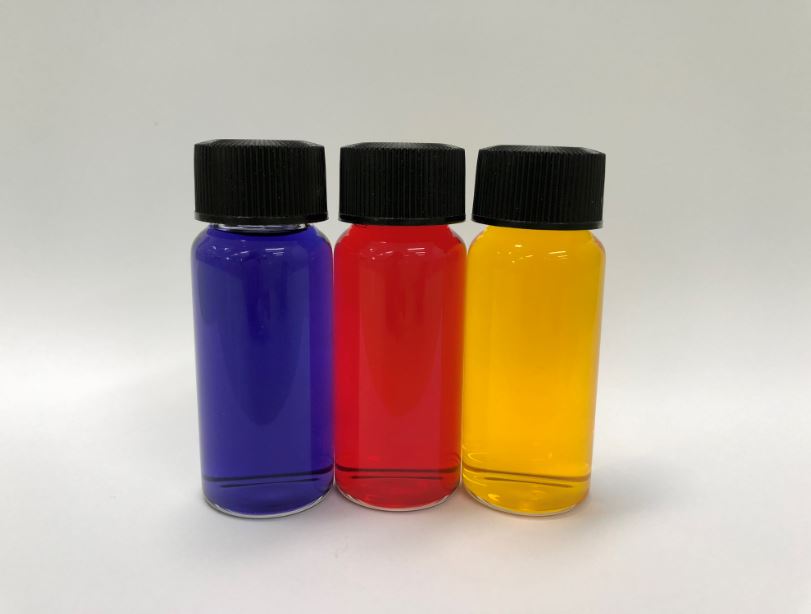
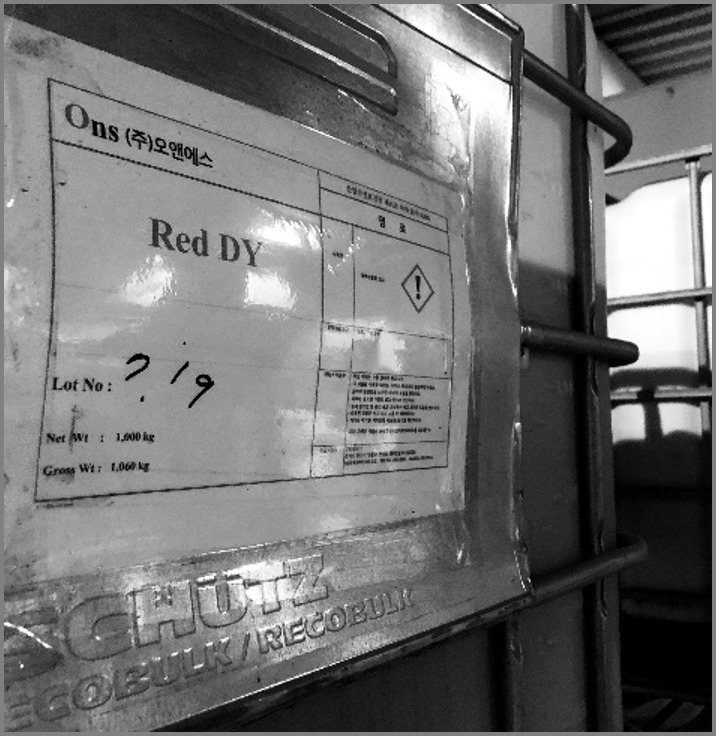
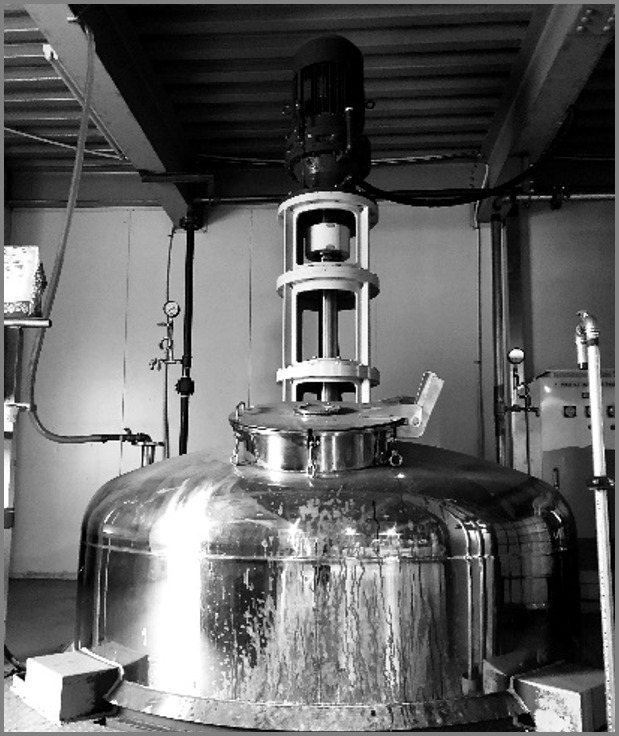
Matching colour does not end with a recipe sheet. We read the process conditions first, then design the colour.
- 01
Map the conditions
We start from furnish type and freeness, water hardness and conductivity, wet-end pH, machine speed and sizing conditions.
- 02
Colour matching
We design the blend in the lab against the target shade — physical sample or Lab values — and hand-sheet it on the customer’s own furnish.
- 03
Dose it
The liquid goes in through a metering pump as supplied — no dissolving step, no dust, no undissolved dye.
- 04
The dye fixes
The anionic direct dye adsorbs straight onto the cellulose pulp. Our Yellow fixes at 99.5 % at pH 4.5 and still holds 95 % at pH 6.6.
- 05
Measure and correct
Colour difference is measured after drying; on lines running the X-rite closed-loop system the deviation is corrected automatically.
- 06
Repeat it tomorrow
When the furnish or the water changes, we re-cut the blend. The goal is not a deep colour — it is the same colour, lot after lot.
- 01
Superb purity through fine filtration
Minimises machine wear and prolongs equipment life
- 02
Fully soluble in water
Uniform output and significantly fewer defects
- 03
Ready-to-use liquid form
No dissolving step — removes both airborne powder and the risk of undissolved dye
- 04
Safe to handle, no dust
No powder to handle — nothing airborne in the workplace
- 05
Long lasting colour
Anionic dyeing fades far less in sunlight than cationic dyeing
- 06
Built for automated dosing
A stable formulation that drops into metering pumps and automated addition systems
Liner board
Corrugating medium
Kraft paper
Colored paper
Packaging and cartons
Tile marker
The only company in Korea developing and producing liquid direct dyes for paper — the three primaries on Korean technology in 2002
Colour matching against each customer’s furnish, water, pH and target shade
On-site support so the target colour holds when conditions move
Domestic production — short lead times and fast technical response
Continuous supply of the key paper shades including Direct Yellow 11
Support for adopting the X-rite closed-loop colour control system
Continuous academic collaboration keeps the technology current
Every lot is checked for appearance, solubility, pH, specific gravity, absorbance, light fastness and filtration — and ships with a certificate of analysis
Export record including Indonesia and the Philippines
Ons does not stop at supplying dye. We design the colour that repeats on your line.
Product list
| Colour | C.I. Name | Ion | pH | Appearance |
|---|---|---|---|---|
| Yellow | Direct Yellow 11 | Anion | 8–9 | Dark Brown Liquid |
| Orange | Direct Orange 26 | Anion | 8–9 | Dark Brown Liquid |
| Orange | Direct Orange 15 | Anion | 8–9 | Dark Brown Liquid |
| Red | Direct Red 239 | Anion | 8–9 | Dark Brown Liquid |
| Red | Direct Red 254 | Anion | 8–9 | Dark Brown Liquid |
| Red | Direct Red 81 | Anion | 6–7 | Dark Brown Liquid |
| Blue | — | Anion | 8–9 | Dark Blue Liquid |
| Brown | Mixture | Anion | 8–9 | Dark Brown Liquid |
| Turquoise Blue | Direct Blue 86 | Anion | 8–9 | Dark Blue Liquid |
| Yellow | Cationic Yellow 50 | Cation | 4–5 | Dark Brown Liquid |
| Red | Cationic Red 12 | Cation | 4–5 | Dark Brown Liquid |
| MV (Methyl Violet) | Basic Violet 1 · C.I. 42535 | Cation | — | — |
| MB (Methylene Blue) | Basic Blue 9 · C.I. 52015 | Cation | — | — |
Release testing — what we check on every lot
| Property | Method |
|---|---|
| Appearance | Visual |
| Solubility | Miscibility in water |
| pH | pH Meter |
| Specific gravity | Hydrometer |
| Absorbance | UV/VIS Spectrophotometer |
| Light fastness | Fastness grading |
| Filtration | Fine filtration, particle check |
Typical properties by colour
| Property | Yellow | Orange | Red | Black |
|---|---|---|---|---|
| Ion character | Anionic | Anionic | Anionic | Anionic |
| Density (20℃) | 1.10 g/ml | 1.10 g/ml | 1.10 g/ml | 1.10 g/ml |
| Viscosity (20℃) | < 70 cps | < 20 cps | < 10 cps | < 35 cps |
| pH (as supplied) | 8.2–9.0 | 7.5–8.0 | 7.3–8.0 | 7.5–8.5 |
| Water fastness | 3 | 4 | 4/5 | 5 |
| Alcohol fastness | 5 | 5 | 4 | 5 |
| Light fastness | 2 | 3 | 2 | 2 |
| Acid fastness | 4/5 | 4/5 | 5 | 4/5 |
| Alkali fastness | 4 | 4 | 4 | 4 |
| Absorption @ pH 4.5 | 99.5 % | 98 % | 95 % | 98 % |
| Absorption @ pH 6.6 | 95 % | 95 % | 90 % | 97 % |
Direct dye vs. cationic (basic) dye
| Item | Direct dye (anionic) | Cationic / basic dye |
|---|---|---|
| How it fixes | Adsorbs directly onto cellulose | Ionic bond via a fixing agent |
| Light fastness | Comparatively strong | Weak — a problem for outdoor packaging |
| Auxiliaries | None required | Needs acetic acid and solvent |
| Burden on the mill | None | Fire risk, effluent load, pipe corrosion |
Auxiliary chemicals for paper
| Product | What it is | Solid content (%) | Ion | Appearance | |
|---|---|---|---|---|---|
| TTR Emulsion | Rosin emulsion | 34.5–35.5 | 2.5–3.5 | Non | White Emulsion |
| DF-K | Defoaming agent | 25 | 8–9 | Anion | White Emulsion |
| RM-7700 | Rheology modifier | 24–26 | 3–5 | Anion | White Liquid |
| ONS-bond | Cross-linking agent | 30–32 | 7.5–8.5 | Anion | Opalescent Emulsion |
| Retention agent | Retention agent | — | 8–9 | Anion | Dark Blue Liquid |
- Our dye runs off into the white water instead of fixing. Why?
-
In water, both the cellulose pulp and the direct dye carry a negative charge. Like charges repel, so on their own the dye would never fix to the stock.
Colour holds on a real paper machine because cationic additives — retention aids, dry-strength resins, PAC — bridge the two. Fixation is therefore a wet-end chemistry problem, not a dye problem.
So when fixation drops, check these before touching the dose: wet-end pH (normally 6–7), the dose and addition order of your cationic additives, water hardness and conductivity, and the anionic trash accumulating in the recirculated white water. We read those conditions first, then design the blend around them.
- Do you synthesise the dye yourselves, and how is strength controlled?
-
We do. Ons makes dye in a reactor; we do not buy it and dilute it.
The route is charge → diazotization → coupling → strength adjustment → QC. An aromatic amine is diazotized with nitrous acid and coupled to form the azo chromophore — the standard synthesis for a direct dye.
Strength is controlled by spectrophotometer, not by eye. Under Beer-Lambert (A = εbc) absorbance is proportional to concentration, so every lot is read against a retained standard and corrected to the specified strength before it ships. That is why the colour repeats from lot to lot.
- What changes if we switch from powder to liquid direct dye?
-
The dissolving step disappears. Powder needs time and labour to be taken into water, generates airborne dust in the process, and any undissolved dye turns into streaks and rejects. Liquid dye is metered in as supplied, so preparation time, dust and undissolved dye all go away together.
- What do you need from us to run a colour match?
-
A sample of your furnish, your water data (hardness and conductivity), wet-end pH and machine speed, and the target shade as either a physical sample or Lab values. If you can share your sizing and wet-end additives we can tune the fixation conditions as well.
- Can you supply Direct Yellow 11?
-
Yes. We supply C.I. Direct Yellow 11 continuously as an anionic liquid at pH 8–9. We also carry the other key paper shades — Direct Orange 26 and 15, Direct Red 239, 254 and 81, and Direct Blue 86.
- How much dye will we need?
-
It varies too much with target depth, furnish, wet-end pH and fixation conditions for a single figure to be meaningful. We fix the dosage during colour matching, on hand-sheets made from your own furnish.
- How is quality controlled, and can we get a certificate of analysis?
-
Before release, every lot is checked for appearance, solubility, pH, specific gravity, absorbance and light fastness, and inspected for particles after fine filtration. pH is measured with a pH meter, specific gravity with a hydrometer, and absorbance with a UV/VIS spectrophotometer. Our technical service centre issues a certificate of analysis, signed off by the quality assurance manager, that ships with the product.
- There is sediment after long storage — is the dye still usable?
-
Store at 5–30 ℃; shelf life is one year. Sediment can form over a long storage period — stir thoroughly before use and the dye performs normally. If you are concerned about shade drift, run a small colour-difference check first.
What are you looking to solve?
Send us the substrate and your constraints — we will come back with an assessment and samples.